




Valor Catastral in Spain: What It Is and How to Find It
Last updated: March 2026
Introduction
If you own property in Spain, the Valor Catastral (cadastral value) is one of the most important figures you need to understand.
It is used to calculate several key taxes, including property tax (IBI), non-resident tax, and other property-related obligations. However, many owners are unsure what it is or where to find it.
This guide explains what Valor Catastral is, how it is used, and how to locate it.
What Is Valor Catastral?
Valor Catastral is the official value assigned to your property by the Spanish Cadastre (Catastro).
It is:
-
An administrative value (not market value)
-
Used for tax calculations
-
Typically lower than the market price
It is calculated based on:
-
Location
-
Property size and characteristics
-
Land and construction value
-
Market data and municipal criteria
Each property has a unique cadastral value registered in the Catastro database.
Why Valor Catastral Is Important
Your cadastral value is used to calculate several taxes:
IBI (Property Tax)
-
Annual municipal tax
-
Typically between 0.4% and 1.1% of cadastral value
Non-Resident Tax (Modelo 210)
-
Based on 1.1% or 2% of cadastral value (if not rented)
-
Taxed at 19% (EU/EEA) or 24% (non-EU)
Learn more:
https://taxadora.com/non-resident-tax-modelo-210-spain/
Capital Gains Tax
-
Used as part of the calculation when selling property
-
Tax rate: 19% for all non-residents
Learn more:
https://taxadora.com/capital-gains-taxes/
Plusvalía Municipal
-
Based on the increase in land value (suelo)
-
Calculated using cadastral data
Important:
The cadastral value is divided into:
-
Land value (suelo)
-
Construction value (construcción)
This distinction is important for certain tax calculations.
How to Find Your Valor Catastral
You can find your cadastral value in several places:
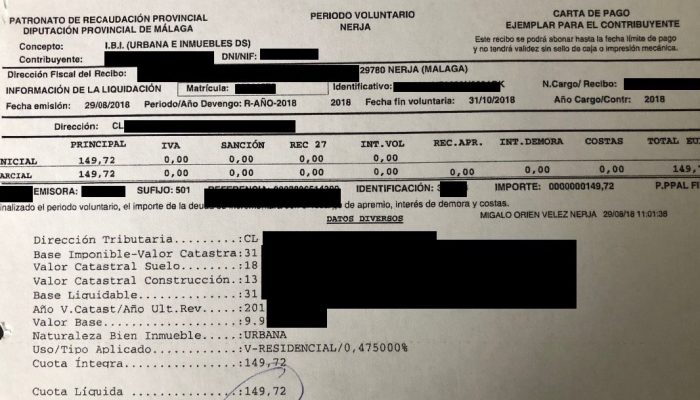
IBI Bill
-
The easiest method
-
Found on your annual property tax receipt
Catastro Website
-
Search using your property details or reference number
Property Deed (Escritura)
-
Often included in your purchase documents
-
May require careful reading
Town Hall (Ayuntamiento)
-
Request a Certificado Catastral
Land Registry (Nota Simple)
-
May include cadastral information
If you have your escritura as a PDF, the information can be difficult to locate—especially in long documents.
What If You Can’t Find It?
If you cannot locate your cadastral value:
-
You can leave it blank when filing with Taxadora
-
Our team will help retrieve it for you
Valor Catastral vs Valor de Referencia
It’s important not to confuse these two:
-
Valor Catastral: Used for ongoing property taxes
-
Valor de Referencia: Used as a minimum value for property purchases and inheritance
Generally:
-
Valor Catastral is lower
-
Valor de Referencia is closer to market value
Can Valor Catastral Change?
Yes, it can be updated due to:
-
Government revisions
-
Property changes or renovations
-
Corrections in the cadastre
If you believe your value is incorrect, you can challenge it through the Catastro.
Common Mistakes
Property owners often:
-
Confuse cadastral value with market value
-
Use outdated figures
-
Miscalculate taxes due to incorrect values
Getting this wrong can lead to overpaying or compliance issues.
How Taxadora Can Help
At Taxadora, we assist property owners with:
-
Rental income tax calculations
-
Capital gains tax when selling
-
Ensuring correct use of cadastral values
We also help you identify your Valor Catastral if needed.
Final Thoughts
The Valor Catastral is a key figure for anyone owning property in Spain.
Understanding it ensures:
-
Accurate tax calculations
-
Compliance with Spanish tax law
-
Avoiding unnecessary costs
Taxadora helps you manage your property taxes efficiently—so you stay compliant without the stress.
Spain Non-Resident Tax Services in Just Minutes
Taxes for Non Residents
Tax Filing for Residents in Spain, Made Easy
Taxes for Residents
Contact us for assistance with a wide range of tax procedures, tailored to your needs
General Conditions | Data Proteccion, Cookies and integrity policy. Spanish VAT nr ESY6837028Q.